
A brighter, more balanced smile can change the way teeth look in photos, during conversations, and in everyday life. That is why cosmetic dentistry remains one of the most searched dental topics online. People are often comparing whitening, bonding, veneers, and crowns, yet the differences between them are not always clear at first glance.
Among these options, cosmetic dental bonding stands out because it is usually fast, conservative, and well suited to small visible changes. If you are searching terms like cosmetic dentist near me or cosmetic dentistry near me, it helps to know which treatment fixes color only, which changes shape, and which is meant for teeth that need more structural repair.
What cosmetic dentistry includes
Cosmetic dentistry focuses on improving the appearance of teeth and gums, though some treatments also offer functional benefits. Common goals include correcting discoloration, smoothing uneven edges, closing small gaps, improving symmetry, and restoring a more uniform smile line.
A cosmetic dentist may recommend professional whitening, cosmetic dental bonding, veneers, crowns, clear aligners, or a mix of treatments. The right choice depends on what is changing: color, shape, size, spacing, or structural damage. This matters because each option removes a different amount of tooth structure, lasts for a different period, and carries a different cost.
People often use the phrase cosmetic dentistry dental when searching online for appearance-focused dental care. In practice, that usually means comparing treatments that look similar in photos but work very differently in real life.
What cosmetic dental bonding is
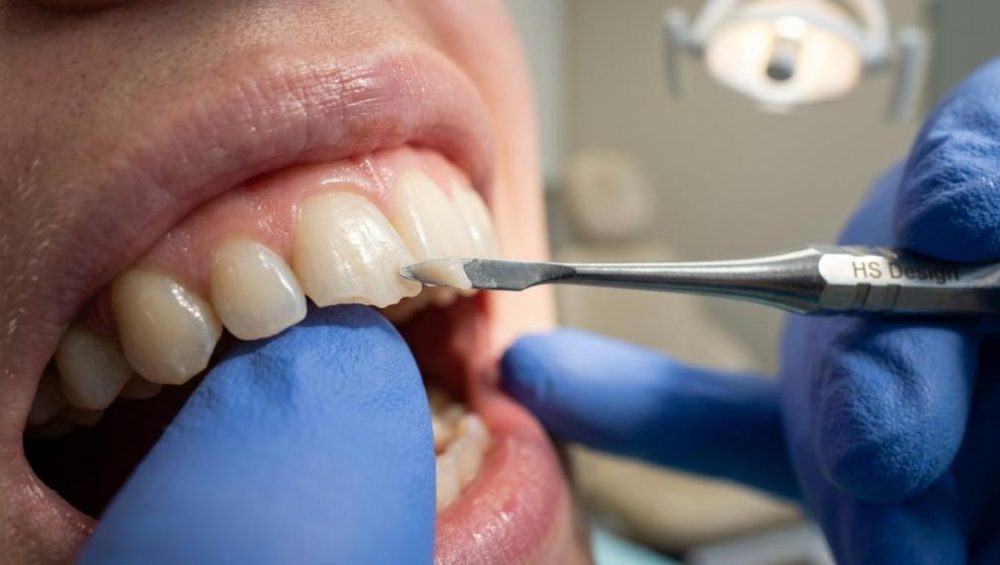
Cosmetic dental bonding uses a tooth-colored composite resin to improve the look of a tooth. The material is shaped directly on the tooth, hardened with a curing light, and polished to blend with the surrounding enamel. Official clinical guidance describes bonding as a cosmetic procedure that can often change tooth shape, size, or color in a single visit.
This treatment is often chosen because it is conservative. In many cases, little or no enamel needs to be removed. That makes bonding appealing for patients who want visible improvement without the preparation associated with veneers or crowns.
Bonding is commonly used for:
- Chips
- Small cracks
- Minor gaps
- Uneven edges
- Teeth that appear too short
- Localized discoloration
A single tooth can often be completed in about 30 to 60 minutes, though total appointment time depends on how many teeth are being treated. Official sources commonly note a lifespan of about three to ten years, which makes bonding durable enough for many patients while still shorter lasting than some indirect restorations.
Cosmetic dental bonding vs whitening, veneers, and crowns
When people compare cosmetic dentistry options, the biggest point of confusion is this: whitening changes color, while bonding, veneers, and crowns can change shape and structure too. That distinction saves time and prevents unrealistic expectations.
| Treatment | Best for | What it changes | Tooth preparation | Typical visit pattern |
|---|---|---|---|---|
| Professional whitening | General stains on natural teeth | Color only | None or minimal | Often one visit or take-home trays |
| Cosmetic dental bonding | Small chips, minor gaps, edge reshaping, spot discoloration | Color, contour, shape, some size changes | Usually minimal | Often one visit |
| Veneers | Front teeth needing bigger cosmetic changes | Color, shape, size, symmetry | Usually some enamel removal | Often multiple visits |
| Crowns | Teeth with significant damage or weakness | Full visible tooth shape and protection | More extensive preparation | Often multiple visits |
This table explains why bonding is so often described as a middle ground. It can do more than whitening, but it is usually less invasive than veneers or crowns.
When teeth whitening makes sense in cosmetic dentistry
Professional whitening is best for patients whose main concern is stain rather than shape. Official dental guidance notes that whitening can work on both extrinsic staining and intrinsic staining, and the most common whitening ingredients are carbamide peroxide and hydrogen peroxide.
There is one limit that matters a great deal: whitening works on natural teeth, not on tooth-colored restorations. That means existing bonding, veneers, crowns, and many fillings will not whiten along with the surrounding enamel. If one front tooth has old composite work, a cosmetic dentist may suggest whitening first and then replacing the restoration to match the new shade.
When veneers or crowns may be better than bonding
Bonding is excellent for modest changes, but it is not the answer for every cosmetic concern. Veneers and crowns are indirect restorations, meaning they are custom made outside the mouth and typically placed over more than one visit.
Crowns are generally used when a tooth has been badly broken down or needs more full-coverage support. Veneers are often chosen when a patient wants a more dramatic and uniform change across several front teeth. They can be especially useful when issues involve shape, size, long-standing discoloration, or enamel wear that exceeds what bonding can predictably manage.
When comparing treatment plans, these distinctions help:
- Bonding: Best for small, targeted cosmetic changes with minimal tooth reduction
- Whitening: Best when the goal is a lighter shade on natural teeth
- Veneers: Best for broader smile redesigns on visible front teeth
- Crowns: Best when appearance and strength both need significant repair
How long cosmetic dental bonding lasts
One reason cosmetic dental bonding is popular is that it offers a strong visual result without a complex process. Still, it is not permanent. Official clinical sources often place its longevity at roughly three to ten years.
That range is wide because daily habits matter. Bonding can chip, stain, or wear over time, especially on edges that absorb biting pressure. Composite materials continue to improve, yet they are still more vulnerable to damage and discoloration than some other restorative materials.
A few habits have a direct effect on how bonding ages:
- Avoid biting hard objects: Ice, pens, and fingernails can chip the resin
- Limit stain exposure: Coffee, tea, red wine, and tobacco can darken composite over time
- Wear a night guard: Helpful if clenching or grinding is an issue
- Soft toothbrush and non-abrasive toothpaste
- Routine checkups and polishing
If a bonded area chips, a cosmetic dentist can often repair or refresh it without replacing the entire tooth surface. That repairability is one of bonding’s practical advantages.
What materials are used in cosmetic dental bonding
The material used in cosmetic dental bonding is typically a tooth-colored composite resin. Official dental sources describe composite resin fillings as a blend of plastic and powdered glass, and similar resin-based materials are used for cosmetic applications because they can be closely matched to natural tooth shade.
This shade matching is one reason bonding remains such a useful cosmetic dentistry option. A dentist can layer and sculpt the resin to imitate natural enamel and dentin, then polish it so the finish looks smooth and light reflective rather than flat.
Composite also supports a conservative treatment approach. Because it is placed directly on the tooth, it can often improve appearance without the more extensive reshaping that some indirect restorations require.
What to expect from a cosmetic dentist consultation
A good consultation should begin with a clear look at your goals, not just your teeth. Some patients want a brighter smile. Others want one chipped edge repaired before an event. Others are looking for a more balanced smile line across several front teeth. The treatment recommendation should match that goal rather than push every patient toward the same solution.
The cosmetic dentist will usually examine tooth health, existing fillings or restorations, bite pattern, enamel condition, and gum health. This is especially relevant for anyone searching cosmetic dentist near me because online photos alone do not show whether a tooth is healthy enough for purely cosmetic treatment.
In many cases, the most useful consultations include photos, shade discussion, and a comparison of conservative versus more extensive options. If whitening, bonding, veneers, and crowns are all possible, ask why one is being recommended over another and what tradeoffs come with each.
Questions to ask when comparing cosmetic dentistry near me
When you compare local providers, look past marketing language and focus on treatment planning, materials, and maintenance. A stronger consultation often feels educational rather than rushed.
Useful questions include:
- Which option fits my goal best: whitening, bonding, veneers, or crowns?
- How much natural tooth structure will be altered: none, minimal, or significant?
- How long should I expect the result to last: and what usually causes replacement?
- Can I see cases similar to mine: chips, gaps, discoloration, or worn edges?
- If I whiten first, will old restorations still match: especially on front teeth?
These questions make it easier to compare cosmetic dentistry near me based on long-term value, not just headline pricing.
Who is a good candidate for cosmetic dental bonding
Bonding is often a strong fit for someone with healthy teeth and gums who wants modest but noticeable change. Small chips, little spaces between teeth, uneven incisal edges, one discolored tooth, or subtle reshaping needs are all common reasons to choose it.
It can also be appealing for younger adults or first-time cosmetic patients who want to improve their smile conservatively. Since bonding usually requires less tooth alteration, it is often seen as a practical first step before considering more involved treatment later.
Still, bonding may not be the best option if the tooth is badly broken down, if the bite places heavy force on the front teeth, or if a patient wants a dramatic, highly uniform smile makeover across many teeth. In those cases, veneers or crowns may provide a more stable answer.
Cost, convenience, and value in cosmetic dentistry treatment choices
Cost matters, but value matters more. Whitening is often the lowest-cost entry point when color is the only concern. Bonding usually sits in the middle because it can make visible shape changes in one visit without lab fabrication. Veneers and crowns often cost more because they involve more planning, preparation, materials, and lab work.
Convenience also shapes the decision. Cosmetic dental bonding is attractive because it is often completed in a single appointment. That speed is meaningful for patients fixing one front tooth before a major event or addressing a small flaw that has always drawn the eye.
The best cosmetic dentistry choice is usually the one that fits your tooth condition, your goals, and your willingness to maintain the result. If your concern is limited and local, bonding may be exactly the right treatment. If the issue is widespread staining, whitening may be the smarter place to start. If the tooth needs major structural repair, a crown may make more sense than a purely cosmetic fix.
That is why the search for a cosmetic dentist should lead to a real treatment discussion, not just a menu of smile services. The strongest results tend to come from matching the least invasive effective option to the actual problem, whether that means whitening, cosmetic dental bonding, veneers, or crowns.